Sunday, 20 October 2013

Party Outfits time-line

Fashion in 1920's


This was the modern Era that women abandoned the more restricting fashions and started to wear more comfortable clothes (such as short skirts). Also in this era fashion was characterized by two distinctive fashion period. In the early part of the decade, where change was slow and adaption was no where to be seen, and then in the mid 20's when the public embrace the styles associated with roaring twenties.  

Fashion in 1930s


This was a interesting era, it was the end of the world war 2.The whole attention at the shoulder, with butterfly sleeves and banjo sleeves, and exaggerated shoulder pads for both men and women by the 1930s. The period also saw the first widespread use of man-made fibres, especially rayon for dresses. The zipper became widely used. 

Fashion in 1940s

The war was still taking place, even with the difficulties and lack in rayon, nylon, wool, leather, rubber, metal and even the amount of fabric that could be used in any one garment, the fashion industry's kept moving slowly along, producing what it could at that time. Hollywood drove fashion in the United States almost entirely, with the exception of a few trends coming from war torn London in 1944 and 1945. Fabrics shifted dramatically as rationing and wartime shortages controlled import items such as silk and furs. Floral prints seem to dominate the early 1940s, with the mid-to-late 1940s also seeing what atomic prints or geometric patterns and shapes. The color of fashion seemed to even go to war, with nautical themes and dark greens and khakis dominating the color palettes, as trousers and wedges slowly replaced the dresses and more traditional heels due to shortages in stockings and gasoline.

Fashion in 1950s


 Fashion after the War is characterized by the rejuvenation of "haute couture" after the catastrophe of the war year. Square shoulders and short skirts were replaced by the soft femininity of Christian Dior silhouette, with its sweeping longer skirts, fitted waist, and rounded shoulders, which in turn gave way to an unfitted, structural look in the later 1950s. By 1947, the Paris fashion houses had reopened, and once again Paris resumed its position as the center of high fashion. The evolution of fashion changes, had been disrupted by the war, and a new direction was long overdue. A succession of style trends led by Christian Dior and Cristobal Balenciaga defined the changing silhouette of women's clothes through the 1950s. Television  joined Fashion magazines and films in broadcasting clothing styles.

Fashion in 1960s


The 1960s had a number of diverse trends involved. It was a decade that broke many fashion traditions, watching social movements during the time.In the middle of the decade, culottes, go-go boots, vinyl dresses and other vinyl clothes were popular. The widely popular bikini came into fashion in 1963 after being featured in a popular musical.
Mary Quant invented the mini-skirt, and Jackie Kennedy introduced the pillbox hat,both becoming extremely popular. False eyelashes were worn by women throughout the 1960s, and their hairstyles were a variety of lengths and styles, all very unique and extravagant. While focusing on colors and tones, accessories were less of an importance during the sixties. People were dressing in psychedelic prints, highlighter colors, and mismatched patterns. The hippie movement late in the decade also exerted a strong influence on ladies' clothing styles, including flare jeans, tie-die, and batik fabrics, as well as paisley prints.
Fashion in 1970s


1970s fashion, which began with progression of the mini skirts, flare and the androgynous hippie look from the late 1960s, was soon characterized several distinct fashion trends. Platform showed on the fashion scene in 1971 and often had soles two to four inches thick. Both men and women wore them. Wide-legged, flared jeans and trousers were another fashion popular for both men and women throughout most of the decade, and this style has been copied in the 1977 film Saturday Night Fever, which starred John Travolta. The "disco look", complete with three-piece suits for men and rayon or jersey wrap dresses for women, which the film further popularized, lasted until it was gradually replaced by punk fashion and straight, cigarette-legged jeans. Platform shoes gave way to mules and ankle-strapped shoes, both important of the 1940s, at the very end of the decade.

Fashion in 1980s


Many styles from the late 1970s remain fashionable in the early 1980s. In the 1970s, the silhouette of fashion tended to be characterized by close fitting clothes on top with wider, looser clothes on the bottom. This trend completely reversed itself in the early 1980s as both men and women began to wear looser shirts and tight, close-fitting trousers.
Brand names became increasingly important in this decade, making Ralph Lauren and Calvin Klein household names, among others.
After the release of her single "Like a Virgin" in late 1984, Madonna became a fashion icon for many young women around the world who copied her "street urchin" look with short skirts worn over leggings, brassieres worn as outer clothing, untidy hair, crucifix jewelry, and fishnet gloves
The 1983 movie Flash Dance made ripped sweatshirts popular.

Fashion In 1990s


The 1990s was the genesis of two sweeping shifts in Western fashion: the beginning of the different types of fashion that wasn't applied at the specific time which continued into the 2000s among a large section of the population, and the beginning of the adoption of tattoos,body piercings aside from ear piercing and to a lesser extent, other forms of body modification such as branding. This started the indifferent, anti-conformist approach to fashion which was popular throughout the 1990s, leading to the popularization of the casual chick look, including t-shirts, jeans, hoodies, and trainers which continued into the 2000s.

Fashion In 2000s


The 2000s are often described as a "mix up" decade, where trends saw the fusion of previous styles, global and ethnic clothing, as well as the fashions of numerous music-based subcultures, especially indie pop. Many in the industry have noted the lack of divide between the 1990s and early 2000s due to the continued popularity of minimalist fashion among young people of both sexes.[2] For the most part, the mid-late 2000s did not have one particular style but recycled vintage clothing styles from the 1940s, 1950s, 1960s and 1980s.

Fashion in 2010s


The early 2010s (2010–present) have thus far been defined by a revival of interwar (fashion while the war was happening), Austerity era (fashion after the war finished),1990s, and, from late 2012 onwards, early 1990s and skater fashion. In the early 2010s, many mid and late 2000's fashion remain popular in Europe, the United States, Latin America, Australia and East Asia, especially the indie look which largely drew upon 1960s mod clothing combined with elements of 1970s garage look and contemporary fashion

Tuesday, 15 October 2013

Liverpool Fashion Report!!

  Fashion Shop Report

A fashion report, from the Liverpool trip. An opportunity to look at party outfits, colours in this season and styles in fashion.
The shops that stock the garments that I research are: John Lewis, Ted Baker, Whistles, Mango and All Saints, a mixture of high end and high street retailers.


  • This first garment, that I will be describing is a Chantille ruffle white blouse.
  • Sold in Ralph Lauren store.
  • It costs £105.00
  • It is made from stretch cotton and broadcloth white.
  • What makes this garment part of a party outfit is the middle details which are the ruffles which gives a more classical look, and how versatile it is, can be worn in day or night.


  • An amazing bejewelled wing blazer, with an attractive print that catches the attention of anyone.
  • Sold in Ted Baker store. 
  • It costs £189.00.
  • It is made from cotton 97% and elastane 3%.
  • What makes this garment a party outfit, is the colours of the print, how different they are and at the same time the different ways that can be worn.


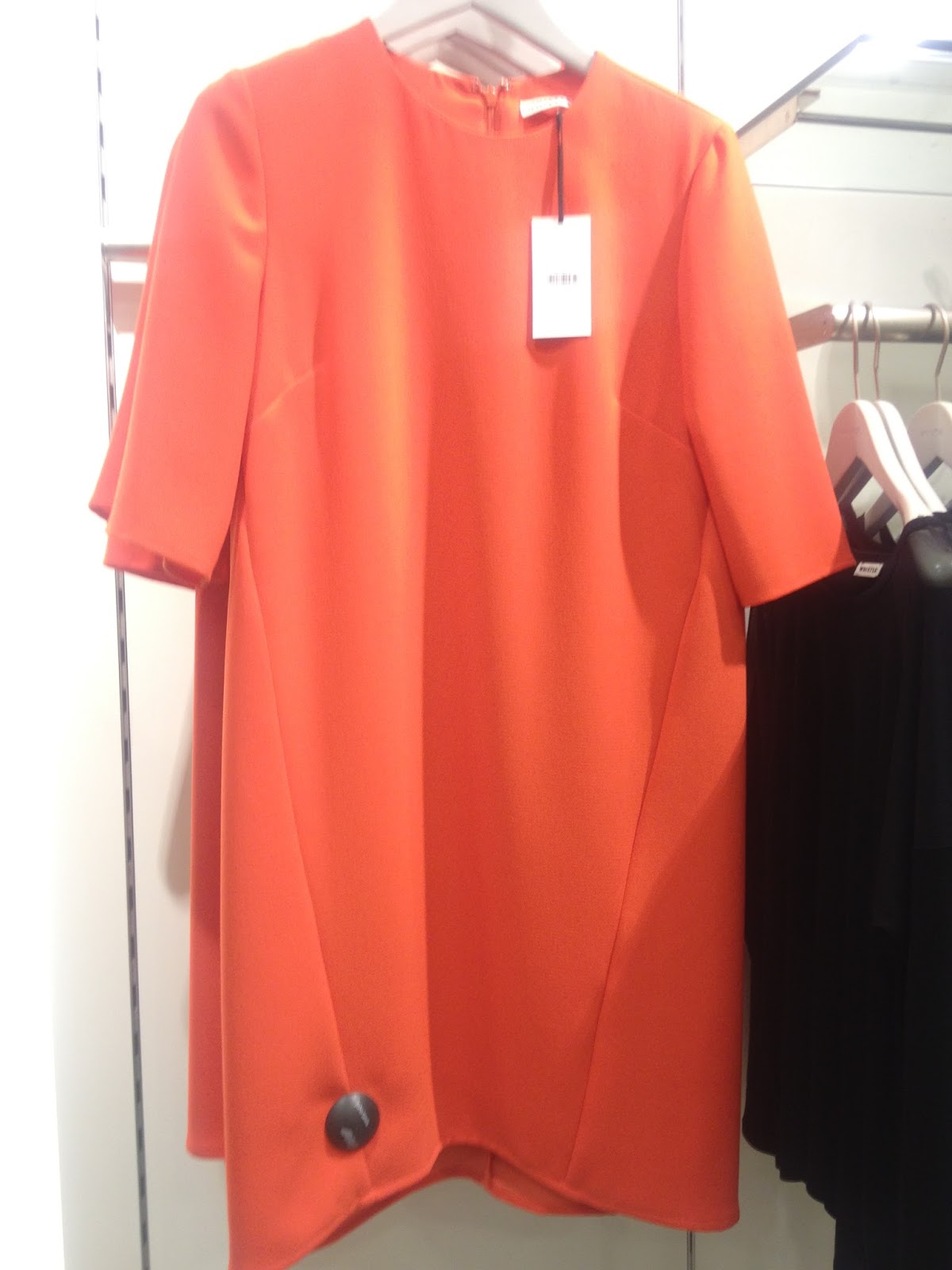
  • A long sculptured dress, that defines women curves to their best, as it is fitted. 
  • Sold in Whistles store.
  • It costs £110.00.
  • It is made from 100% polyester.
  • What makes this garment a party outfit is the warm colour a spring/summer 2013 must have, the way it is design and the cuts that has, it boots up the confidence.


  • A print Sicilian dress with v plunge.
  • Sold in Mango store.
  • It costs £34.99
  • It is made from 100% polyester.
  • What makes this garment a party outfit is the print, how can be accessorize and, the detail in breast area.


  • Scratch Leus Shirt, with print all over.
  • This garment is sold in All Saints.
  • It costs £128.00.
  • Is made from 100% silk.
  • What makes this garment a party outfit is the type of print that has and how the fashion style would change by wearing the garment.


By looking around the stores I could figure out what colours are in fashion this season they are: red, grey and print.


The styles that are in latest fashion are: the floppy hat, pep plum tops with a nice blouse and mid length dress that is shown in last picture with designer Victoria Beckham.


1950s VS 2013s era

Which Decade you would prefer to live in and why?

The 1950s Era


The 2013s Era


I would prefer to live in 1950s Era, because women were excluded do to certain things in society, which it can be a good point as now society as degraded us so much( a good example would be Miley Cirus recent posts in the media). Men use to take care of the household, while the wife used to be a full-time house wife. Even tho women were deprived of almost all things in public society, her unconditional love from the husband would fill the empty spaces.
Also in the era, people use to have enormous fun with rock and roll music type at the time, even going further with competitions.

Whilst now,people seem to compose music for fun, attacking others and using unacceptable language/lyrics. 
Fashion was majorly affected,as in the era women weren't allowed to wear trousers, as that would belong to the man of the family it would also demonstrate respect. Women were only allowed to show or be provocative to their husband and only. 

Education wasn't the best, as only the wealthy community could go to the best schools and colleges, while the population had to go to the community ones.Whilst now anyone can attend a private sector of education as long they pay, the background doesn't have to come from wealthy background.
Economy wasn't good in the 1930's a lot of protests and a simple life was lived by the community.
Technology wasn't advance at all, so communication was a barrier, the old good methods was applied like letters, writing machines. Stuff that almost has be forgotten and took over by emails, text messages, voice mail, face time etc.. 

Fashion in 1950's, has definitely impacted fashion in 2013, by bringing back full skirt,  pointed bust, small waist, and rounded shoulder. The look became popular post second world war.
The "New Look" as they called wasn't well accepted by Americans; however that rapidly changed as the trend dominated fashion magazines, stores and audience.  Other styles that became popular during the post-war period were “a tailored, feminine look with gloves and pearls, tailored suits with fitted jackets with peplums, with a pencil skirt.  Day dresses had fitted bodices and full skirts, with jewel or low-cut necklines or Peter Pan collars.  Shirt-dresses and halter-top sundresses were also popular.  Skirts were narrow or very full, held out.  Gowns were often the same length as day dresses with full, frothy skirts, and cocktail dresses were worn for early-evening parties.  Short shrugs and bolero jackets were often made to match low-cut dresses. 

The way that impacted 2013 fashion is that most of the items mentioned are being used, and are in the latest trends, (i.e peplums tops,pencils skirts and  Perls etc), and it is a look that is very sophisticated and classic in today's society.

The Fifties was also an era where the early feminism start to appear, as some women went to the war to defend their country. The Independence began to get introduce, as women started to get confident and designing their own textiles and designs (according to the news paper  http://www.artlyst.com/events/fifties-fashion-and-emerging-feminism-collyer-bristow-gallery). The women that lived in those years " was the stereotypical image of the fifties is of a modern, clean world where glamorous women flit around homes filled with contemporary, colourful design by the likes of Lucienne Day (famous designer in fashion world) . The truth for most women was quite different. The shadow of the war still loomed, rationing for textiles and clothing ". (Information quoted from the news paper article artlyst). In comparison to 2013's fashion, where in my point of view women can express themselves any how, pretty much to show their identity and what they want to be portrait as. Even thou their are in the 21st century women, independent , driven and dedicated to their careers, they make the effort to put their hair in curlers and recreate the look of the glamorous 50's housewife everyday appearance. These women belong to a part of a specific sub-culture which has become a lifestyle choice, their clothes are originals from the era or vintage shop. (information resumed from the newspaper artlyst). In my point of view the vintage clothing represents something special of the related decade, which brings history back.


What about fashion Changes?

What about fashion changes?

Colours (primary, secondary and tertiary), fabrics, styles, culture, media, acessories, beauty, shapes.

What changes fashion?

Religion, recession, World war, religion, jobs, feminist, freedom, education (liberation ), society, money.

1990's Fashion

The era of 1990's

This was the time where, body piercings, ear piercing and tattos were introduced. The population started to opted for some more casual chick look, that includes t-shirt, jeans, hoodies and trainers, which continued into 2000's. The popularity of alternative rock music was major in the era.
 

Tuesday, 8 October 2013

Party Outfit Photoshoot!!


Clothes Show Live Evaluation
In order to create this amazing garment, I choose a theme which was Red Carpet, and kept in mind the important points to address that were style, colour and patterns. The red carpet event is best known for its style, elegancy and black tie for the guys and the long dresses for the ladies, so I kept that in my design whilst planning. People use varieties of colours, mainly vibrantes (sparkles, gold, silver, bronze and black), as it stands out in red carpet and it is kinder “tradition” for the event. Patterns are kept to a minimum, as the colours speaks for itself, so mainly pleated and gathered are use in the red carpet, because it will show off the women figure, which it was implemented in my designs and final outcome.

I made this garment by, drawing a plan and putting in practice everything that I collected and learned throughout the lessons. Started off by exploring different theme parties, and choose the one that would related more with me, which in this case will it be Red Carpet. Then I looked at different styles and designs, and the ones that fall into the category, so I inspired my fabrics, style and patterns in an elegant dress worn by the Singer Kelly Rowland, in last year Red Carpet event designed by the famous designer Valentino.
So I started my journey by creating a mood board, then a style board so I could relate to my research. I then moved on to creating samples of pleated and gathering techniques, and a calico sample of a top, so I could apply into the garment. After sampling with techniques, I created 10 sketches of different types of dresses by just using the pleated and gathering sewing technique. Then I chose the one that I was going to develop further, and created an illustration, by applying colour, patterns, designs and measurements so I could then choose the best fabric to apply. With fabric chosen, and further development plan I started to put the fabrics together, by applying the pleated and gathering technique’s all in the industrial sewing machine.

The fabrics that I decided that would be ideal for the garment were: satin and mesh, because it would be the most appropriate for an event that has a long duration of time, and you must feel comfortable for the entire night. For the patterns I kept simple and plain as the colours, are the main focus in the garment. No decorations was applied, while elaborating the plan, therefore I kept the original plan of not adding on.
The garment matched the theme, by linking into the mood and style boards, samples, illustration and fabrics applied.

During the project, I struggle with a few things like: sewing the darts, manage the time accordantly and concentration. I will improve that by making sure I produce enough samples to get more confident with industrial machine; set myself targets each lesson and check at the end if they were achievable and remain focus in the plan by alternate work (i.e. sew for 20 minutes then do 15 minutes annotations, so the brain is not overloaded in one thing).

What makes the dress suitable for the ‘Red Carpet’, is the type of fabric and style that I used. The fabric was light and adequate for the environment, something that it is very important to consider, when constructing a garment for this type of event. The style was elegant and classic as it is to be worn by a women, that is in their mid 20’s and doesn’t necessarily wants to show much of the body figure (i.e married). The colours chosen were, a big hit of spring/summer 2013 that is the reason that I decided to implement into my dress, to kinder remember the colours, and even though we are in autumm/winter it can still be used. disseminating.

If I had the opportunity of making my garment again, I would incorporate a corset around the waist so the curves were more defined, also make an accessory to go with garment and make the final photoshoot outside with real red carpet so it could be seen more realistic. 

Tuesday, 1 October 2013

Flat Outfits

This flat image of my Party Outfit, was created based on the mood boards. I used both colours together to develop the mood boards even further. This was used in order to help me for the final garment decision.